Model Context Protocol (MCP): Architecture and Design of Tool-Connected Language Models
Large Language Models have rapidly evolved from text generation systems into general-purpose reasoning engines capable of interacting with software systems. However, traditional LLM architectures operate within a static prompt context and cannot directly interact with external tools, APIs, or databases. The Model Context Protocol (MCP) introduces a standardized interface that enables language models to securely access tools, data sources, and external applications. Instead of implementing ad-hoc integrations for each system, MCP provides a unified framework for connecting models to contextual resources. This article presents a detailed explanation of MCP, including its architecture, protocol design, system components, security considerations, and research foundations.
1. Motivation Behind MCP
Modern AI systems increasingly require interaction with external infrastructure. Examples include querying structured databases, retrieving documents, accessing software development environments, and performing actions across enterprise systems. Without a standardized protocol, every LLM integration must be implemented manually, leading to fragmented infrastructure and inconsistent interfaces. Model Context Protocol was designed to address these challenges by defining a structured communication framework between language models and external capabilities.
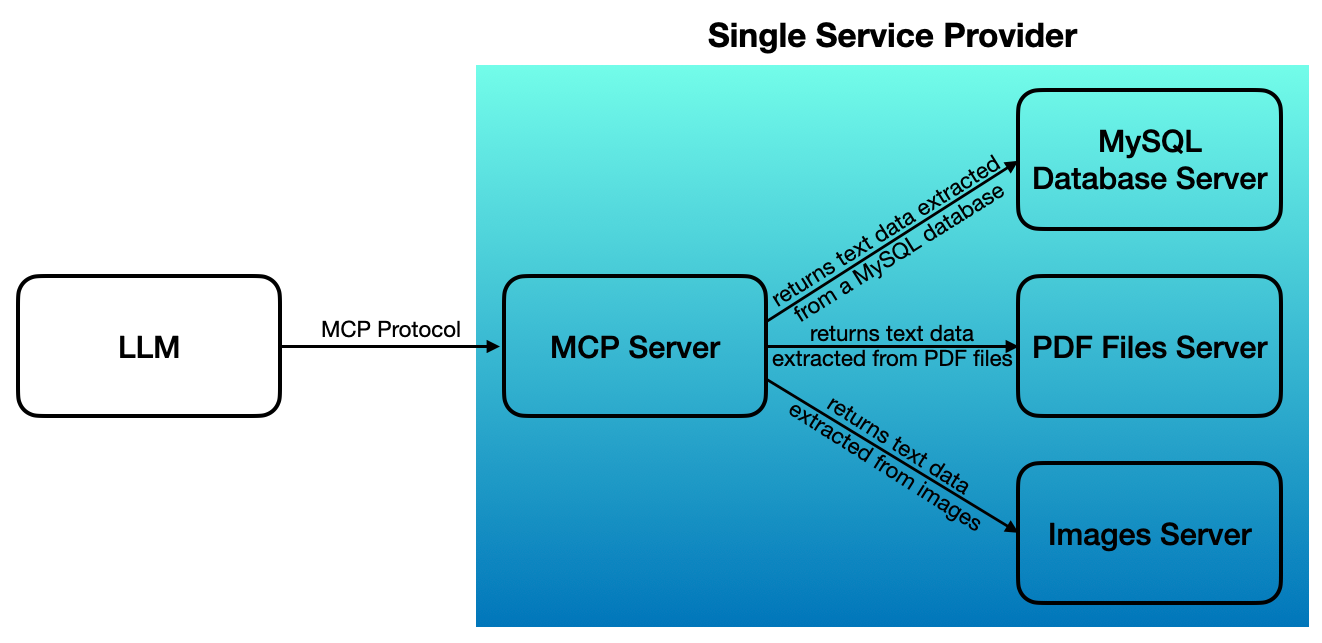
The protocol effectively introduces a client-server architecture where language models interact with tools through well-defined interfaces rather than direct system access.
2. High-Level Architecture
At a high level, MCP introduces three primary system components.
- Language Model Runtime
- MCP Client Interface
- MCP Server providing tools and resources
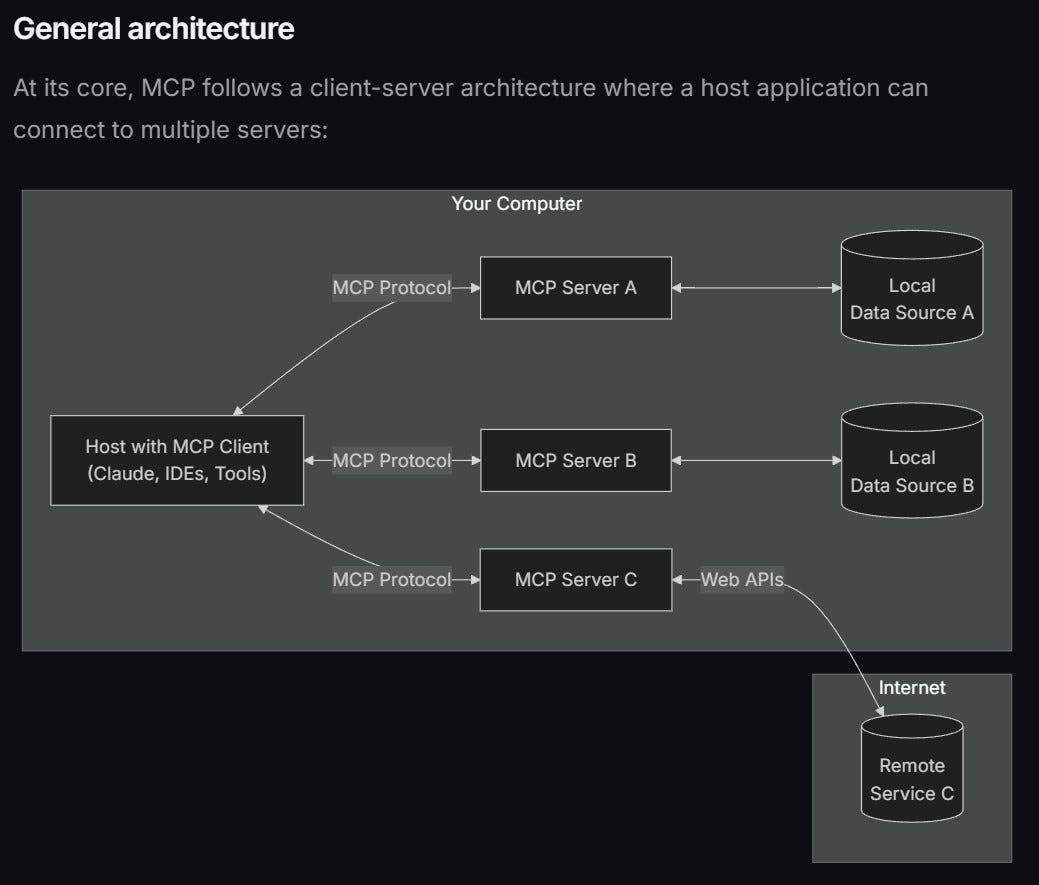
The language model communicates with an MCP client responsible for discovering available tools and interacting with MCP servers that expose capabilities. This design allows the model to remain isolated from direct system interaction while still accessing powerful external services.
3. Core Components of the Protocol
MCP Client
The MCP client acts as the communication layer between the model and the external environment. It performs several responsibilities:
- Tool discovery
- Capability negotiation
- Protocol communication
- Context management
MCP Server
The MCP server exposes tools and contextual resources. Each server publishes metadata describing available capabilities so that the language model can understand what operations are possible.
Resources
Resources represent structured data sources accessible to the model. Examples include:
- Knowledge bases
- Document repositories
- Source code collections
- Database tables
4. Tools in MCP
Tools represent executable capabilities exposed by MCP servers. These tools can perform tasks such as querying data, executing code, retrieving documents, or interacting with APIs. Each tool is described using a schema that defines its parameters and expected output format.
{
  "name": "search_documents",
  "description": "Search internal documentation",
  "parameters": {
    "query": "string"
  }
}
The schema allows language models to reason about tool usage and invoke the appropriate operations during problem solving.
5. Context Resources
Context resources allow language models to retrieve structured information beyond the prompt window. Instead of embedding large documents directly in the prompt, the model can dynamically access information through the MCP framework.
This mechanism allows systems to scale beyond the token limitations of the model's context window.
6. Request Lifecycle
An MCP interaction typically follows a sequence of operations.
- The model determines a required capability.
- The MCP client discovers available tools.
- The model generates a tool invocation request.
- The MCP server executes the request.
- The result is returned to the model.
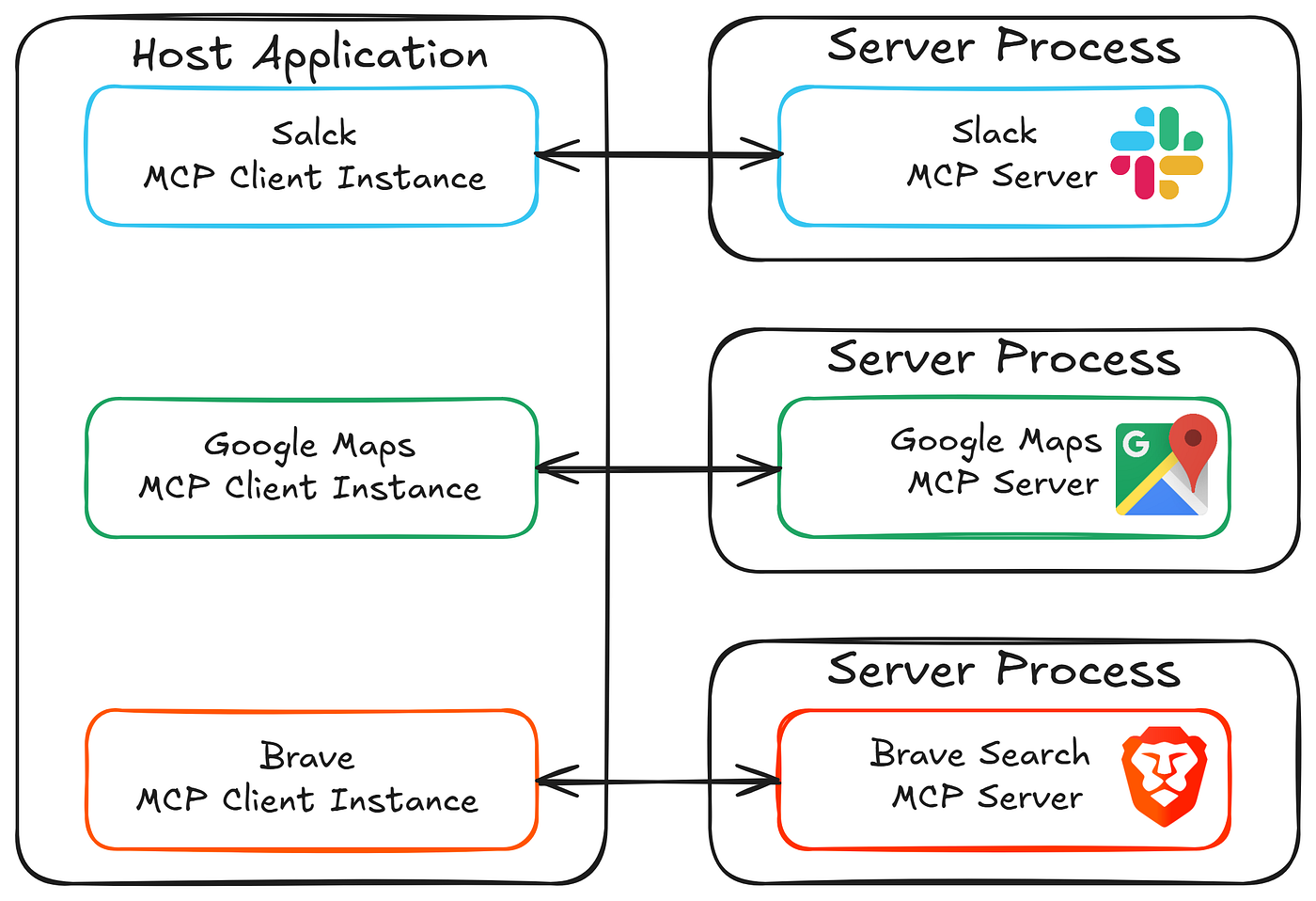
This cycle allows the model to combine reasoning with tool execution in an iterative process.
7. Example MCP Server Implementation
from mcp.server import MCPServer

server = MCPServer()

@server.tool
def get_weather(city: str):

    return weather_api(city)

server.start()
In this example, a simple weather lookup function is exposed as a tool that any compatible language model client can invoke.
8. Security Considerations
Because MCP enables models to interact with external systems, security is a critical aspect of the protocol design. Important mechanisms include:
- Authentication
- Permission boundaries
- Sandboxed execution
- Audit logging
These safeguards ensure that models cannot perform unauthorized operations even when interacting with powerful tools.
9. Relationship to AI Agent Systems
Model Context Protocol plays a significant role in the development of AI agent architectures. Agents often require access to multiple tools, knowledge bases, and execution environments. MCP provides a standardized infrastructure for building such systems.
Agent frameworks can leverage MCP servers to orchestrate complex workflows involving multiple external systems.
10. Advantages of MCP
- Standardized tool interfaces
- Improved interoperability across AI systems
- Reduced engineering complexity
- Scalable architecture for enterprise AI
11. Research Foundations
Several research directions influenced the design of the Model Context Protocol.
- Toolformer: Language Models Can Teach Themselves to Use Tools
- ReAct: Combining Reasoning and Acting in Language Models
- Retrieval Augmented Generation architectures
- Agent-based AI systems
These works demonstrated that language models achieve stronger performance when combined with external capabilities.
12. Future of AI Tool Protocols
As language models become integrated into software systems, protocols such as MCP may form the backbone of AI-native infrastructure. Future developments may include:
- Multi-agent communication protocols
- Distributed reasoning architectures
- AI-native operating systems
- Autonomous workflow orchestration
The Model Context Protocol represents an early step toward a standardized ecosystem where language models interact seamlessly with the broader computational environment.
Conclusion
The Model Context Protocol introduces a structured approach for connecting language models with external tools and contextual resources. By separating the model runtime from external capabilities, MCP enables scalable, secure, and interoperable AI systems. As the ecosystem of AI applications continues to expand, standardized interfaces such as MCP will play a critical role in shaping the infrastructure of next-generation intelligent systems.